
Amazon Web Services (AWS) is a comprehensive and evolving cloud computing platform provided by Amazon. It offers a mix of infrastructure as a service (IaaS), platform as a service (PaaS), and packaged software as a service (SaaS). AWS services include computing power, storage options, networking, and databases, among others.
AWS is popular due to its scalability, reliability, and robust ecosystem. It allows businesses to scale their operations quickly, handle large volumes of data efficiently, and innovate faster by leveraging a wide array of services.
EC2 (Elastic Compute Cloud): Provides resizable compute capacity in the cloud. It's designed to make web-scale cloud computing easier for developers.
Lambda: A serverless compute service that runs your code in response to events and automatically manages the underlying compute resources.
Elastic Beanstalk: An easy-to-use service for deploying and scaling web applications and services.
S3 (Simple Storage Service): Scalable object storage for a wide range of data storage use cases.
EBS (Elastic Block Store): Persistent block storage volumes for use with EC2 instances.
Glacier: Low-cost cloud storage service for data archiving and long-term backup.
RDS (Relational Database Service): Managed relational database service for MySQL, PostgreSQL, MariaDB, Oracle, and SQL Server.
DynamoDB: Fast and flexible NoSQL database service for single-digit millisecond performance.
Redshift: Fast, scalable data warehouse that makes it simple and cost-effective to analyze all your data using SQL and existing business intelligence tools.
VPC (Virtual Private Cloud): Allows you to launch AWS resources in a logically isolated virtual network.
Route 53: Scalable Domain Name System (DNS) web service.
CloudFront: Content delivery network (CDN) service that securely delivers data, videos, applications, and APIs to customers globally with low latency and high transfer speeds.
CloudWatch: Monitoring service for AWS cloud resources and the applications you run on AWS.
CloudTrail: Enables governance, compliance, and operational and risk auditing of your AWS account.
AWS Config: Provides AWS resource inventory, configuration history, and configuration change notifications.
IAM (Identity and Access Management): Enables you to manage access to AWS services and resources securely.
KMS (Key Management Service): Makes it easy to create and control the encryption keys used to encrypt your data.
Shield: Managed DDoS protection service to safeguard web applications running on AWS.
⦁ Scalability: Use Auto Scaling to adjust the capacity of your EC2 instances. Leverage serverless architectures with AWS Lambda.
⦁ Fault Tolerance: Distribute applications across multiple Availability Zones. Use Elastic Load Balancing to distribute traffic across multiple targets.
⦁ Security: Implement the principle of least privilege with IAM roles and policies. Use AWS Shield and WAF to protect against DDoS attacks and web exploits.
⦁ Cost Management: Use AWS Cost Explorer to analyze your spending and find cost-saving opportunities. Optimize storage costs with S3 lifecycle policies.
⦁ Performance: Use CloudFront for faster content delivery. Utilize caching mechanisms like ElastiCache.
⦁ Setup: Launch an EC2 instance to host the webserver. Use RDS for the backend database.
⦁ Storage: Store static assets like images and CSS files in S3.
⦁ Networking: Use VPC to create a secure network environment. Configure a Security Group to control traffic to the EC2 instance.
⦁ Scalability and Load Balancing: Use Auto Scaling groups to handle varying loads. Implement an Elastic Load Balancer to distribute incoming traffic.
⦁ Monitoring: Setup CloudWatch to monitor the health and performance of your application.
⦁ Security: Use IAM to manage access to AWS resources. Implement SSL/TLS for secure communication.
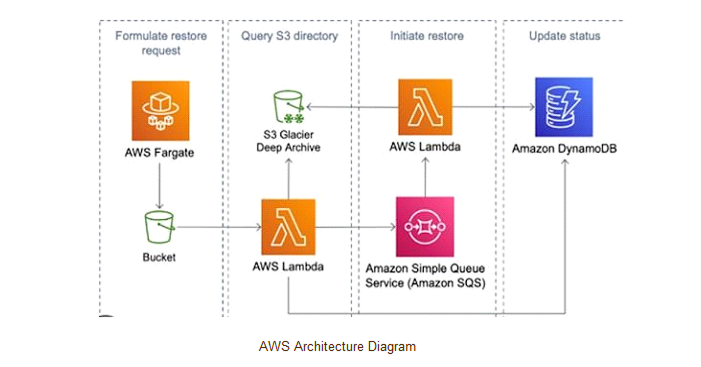
AWS provides a robust and flexible platform for building scalable and reliable applications. By leveraging its wide array of services, you can design architectures that meet your specific needs while ensuring security, performance, and cost-efficiency. Whether you're a startup looking to deploy your first application or an enterprise migrating complex workloads, AWS has the tools and services to help you succeed.






Comments